CEROS VS. FRAMER · COMPARISON
Embed immersive experiences vs
launch full sites
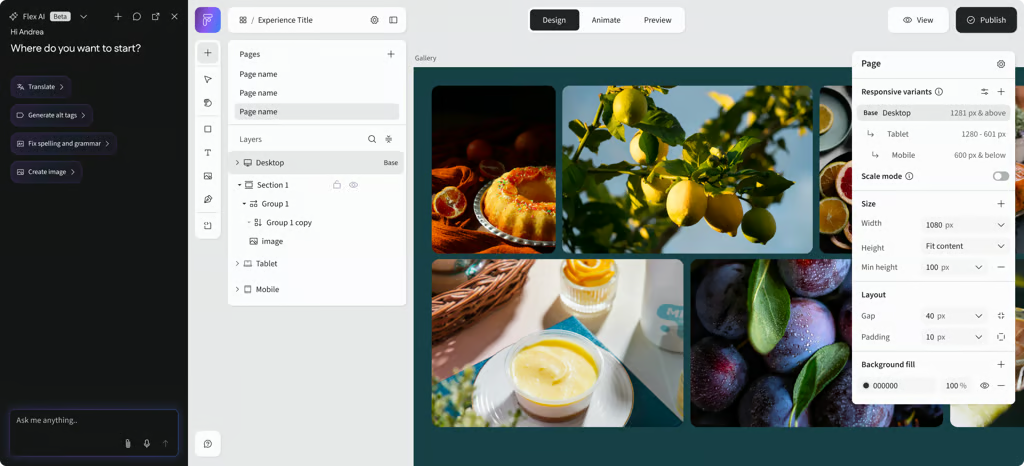
Framer excels at building and hosting websites. Ceros is purpose-built for interactive content that embeds into any existing architecture — landing pages, reports, sales demos, and thought leadership — without touching your web infrastructure.
Trusted by leading teams at





01 · WHY CEROS
Why Ceros?
.png?imageOpt=1&width=1024)
Universal CMS embedding
Ceros experiences deploy seamlessly as interactive embeds inside your existing enterprise stack, keeping your current CMS, analytics, and infrastructure completely intact. In contrast, Framer requires you to host and route entire root domains or subdomains through their proprietary platform, making it rigid for localized marketing collateral within a large legacy corporate site.
Universal CMS embedding
.png?imageOpt=1&width=1024)
No-code animation + interactivity
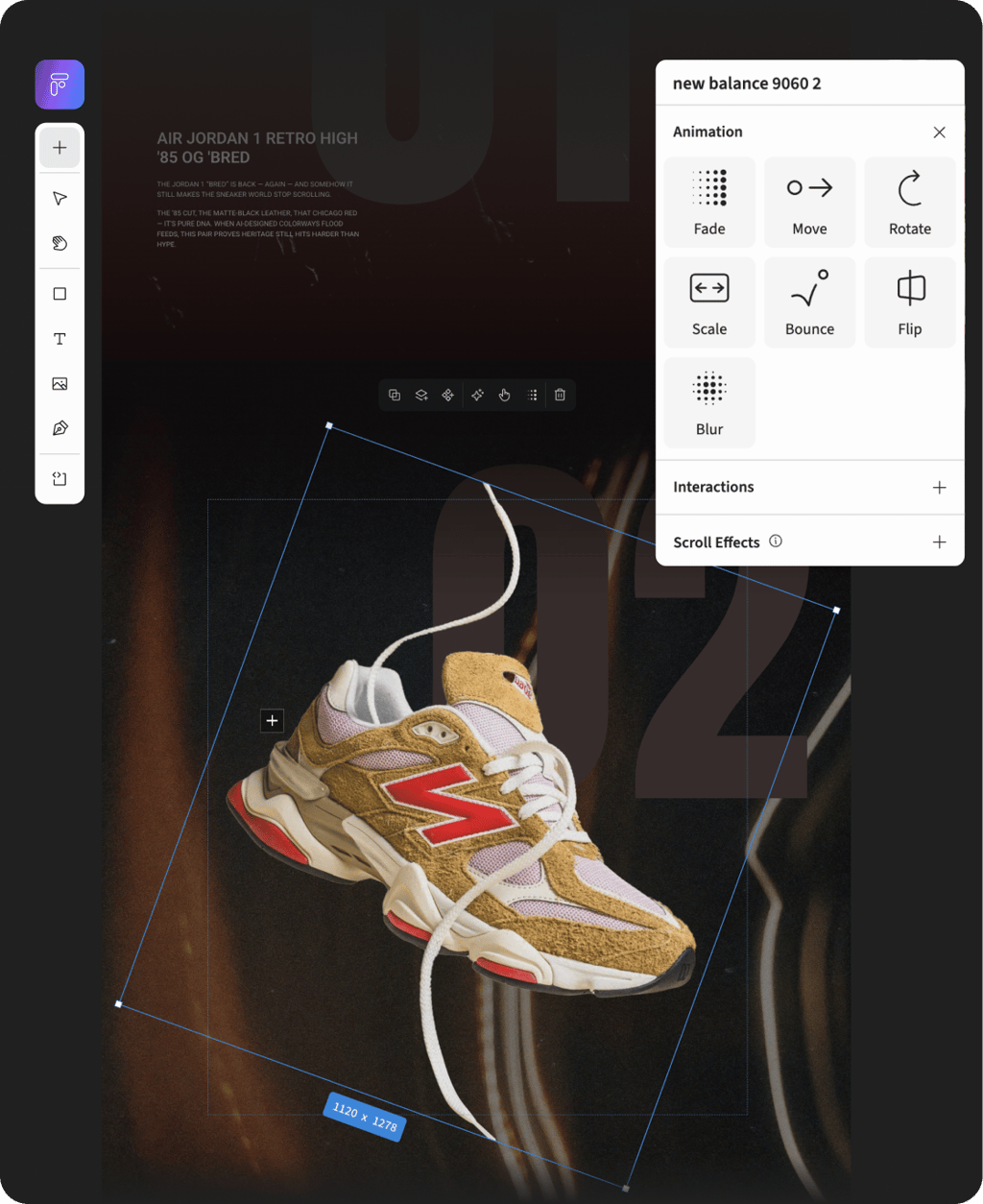
Designers get absolute freeform layout control to create heavy-duty animations, interactive data visualizations, and branching content journeys without touch-typing code or setting up intricate responsive break-point conditions. While Framer provides excellent web-component logic, its canvas forces layout constraints designed for functional app navigation rather than sensory marketing campaigns.
No-code animation + interactivity
.png?imageOpt=1&width=1024)
Granular behavioral analytics
Ceros tracks clicks, dwell time, and engagement at the page and object level — then pushes that data to the tools you already use, including Google Analytics, Adobe Analytics, HubSpot, and more. You get richer content engagement data than standard page views, without replacing your analytics infrastructure.
Granular behavioral analytics
02 · FEATURE COMPARISON
How we stack up.
Capability
Ceros
Framer
DESIGN & AUTHORING
Content scope
Ceros
Full content lifecycle
Landing pages, reports, RFPs, demos, sales collateral, and thought leadership. One platform from awareness to close.
Framer
Websites and landing pages only
Framer 3.0 expanded AI but didn't expand content scope.
No-code experience
Ceros
Genuinely no-code
Designers build interactive experiences — animations, state changes, journeys — without CSS or JavaScript.
Framer
Advanced work requires code
Fast for standard sites; customization beyond templates needs developer skills.
Interactivity
Ceros
Built-in interactivity engine
States, triggers, sequences, and microinteractions directly on the canvas.
Framer
Strong visual defaults
Interaction depth beyond standard animations requires code.
AI & ASSISTANCE
AI approach
Ceros
Flex AI — four-mode creative collaborator
Inspire, Plan, Build, Review. Designer stays in control of every pixel.
Framer
Agents on the canvas
Build and edit live sites. Supports External Agents (Claude Code, Cursor, Codex, Gemini).
PERFORMANCE, SEO & PORTABILITY
Performance infrastructure
Ceros
HTML-first. Lighthouse 95+
Schema.org, WCAG 2.2 built in. Ranks in traditional search and AI-generated answers.
Framer
Optimized for hosted websites
Good Lighthouse scores; no AEO infrastructure or per-element accessibility tooling.
Analytics
Ceros
Object and page-level tracking
Clicks, dwell time, and engagement pushed to GA, Adobe Analytics, HubSpot, and more.
Framer
Basic page-level analytics
No object-level or interaction-level data.
ENTERPRISE READINESS
Security & compliance
Ceros
SOC 2, ISO 27001, GDPR, SSO
Audit logs. AI is opt-in and disableable for regulated industries.
Framer
No SOC 2. Limited SSO
Built for teams and agencies, not enterprise IT requirements.
03 · DEEP DIVES
Why switch from Framer to Ceros?
Flex AI works in four modes built into the canvas: Inspire (brainstorm concepts and directions), Plan (map structure and layout), Build (generate copy, animations, and components), and Review (catch issues before you publish). It understands your project context, so suggestions are relevant — not generic. You stay in creative control at every step; AI handles the heavy lifting.
05 · CUSTOMER PROOF
Don't take our word for it.
+80%
Longer dwell times
10x
Higher click-through rates
95+
Lighthouse scores
Up to 2x
Higher conversion rates
Working with Ceros has cut our production time in half. With Ceros, we can churn out content in two or three weeks.
Jeff Holmes,
Senior Director, Client Services & Planning, TheSkimm
We've shortened our deal cycles by 10 to 20% and can now quickly iterate on content and deliver it to customers faster.
Colton Pond
VP, Head of Marketing, Truv
As Ceros evolved, so did our use of it. Now we use Ceros for event sites, charity events, and client parties, and still rely on it for interactive proposals.
Genevieve Gillespie
Media Design Manager, McCarthy Building Companies
Ceros allows us to tell the story of our brand in a way that actually connects, and brings the human element into what we do.
Meredith Burall
Creative Services Director, BDO
Common questions about Ceros vs. Framer
The bottom line
Built for teams who treat interactive content as a craft.
Framer is a strong choice for teams building and hosting websites — especially with Framer 3.0’s AI agents. But if your team ships interactive content across the marketing lifecycle — reports, demos, RFPs, landing pages embedded in your existing site — you need a platform built for that scope. Ceros gives you the creative freedom, enterprise infrastructure, and AI-assisted speed to do it without a developer, without compromising on quality, and without losing brand control.