Amplified not replaced: What AI actually do for creative teams
AI’s role is to handle the pattern-following work, so creative teams can own the pattern-breaking. Here’s that that means, and why the tools you choose determine whether you get there.
BY Lydia Burns
April 17th 2026 – 5 min read
AI & CREATIVITY
Amplified not replaced: What AI actually do for creative teams
There’s a version of the AI story that’s been told a thousand times—machines are coming for creative work. The image generators, the copy tools, the layout automators, they all arrived with a quiet implication. Your judgement is optional. Your taste can be manufactured. The loop you’ve been running of brief, concept, execution, refine can be shortened (maybe even replaced).
It’s a narrative that’s done real damage. It’s sent creative teams scrambling to justify their value. And it’s required teams to pit AI tools as adversaries, while also muddying the conversation around what AI should actually be doing inside creative organizations.
Here’s the conversation we think we should be having instead—the companies that win in the AI era aren’t the ones who give the most to AI. They’re the ones who protect what AI can’t do.
AI is a pattern machine. Creativity is a pattern breaker
This is the distinction that matters most, and it’s the one that almost never gets said out loud.
What AI is genuinely good at recognizing what’s been done before, and doing more of that. Not repeating it exactly (it’s more sophisticated than copy-paste) but drawing from the aggregated weight of everything humans have made and finding the patterns inside it. Give it a brief and it’ll return something that fits. Give it a brand voice and it’ll do its best to mimic it. In the right lane, it’s genuinely useful.
But the work that actually moves the needle doesn’t live in that lane. The campaign that cuts through a crowded feed, the creative direction that redefines how a category talks about itself, the brand voice that feels like it’s truly unique in a crowded space—that’s the work that lives at the edge of patterns, or outside it entirely. It requires someone to make a call that isn’t supported by precedent. AI doesn’t make those calls. We shouldn’t be trusting it to. It optimizes for coherent, not surprising or inspiring.
The quiet erosion of creativity
The bigger question isn’t whether AI will replace creative teams. It’s whether the tools creative teams lean on will quietly redistribute authority away from them—without anyone deciding it’s an intentional decision
It often happens gradually. A team starts using AI to generate layout because it’s fast and the outputs are decent. The prompt quickly becomes the brief. The design review becomes a quick round of AI feedback. And just like that, the creative director spends less time directing and more time editing machine output. Sure, the work looks polished, but it stops being surprising.
This redefining of what a creative does is a predictable outcome of a specific kind of tool. It’s where the choice of what tools you use matters.
The most popular AI tools right now are built around a core premise—the AI generates and you react. Sometimes the output is impressive, especially for exploration and ideation. But these systems have shallow editing surfaces, with no stable structure underneath to build a real editor on top of it. With these tools, any meaningful changes—ones that require creative judgement—means you fall back into a cycle of editing by prompt. You describe what you want to see changed and the AI tries again. The human gets stuck in a feedback loop with a bot that owns the canvas space.
What AI should actually do for creatives
There’s a different model out there, one that changes the relationship entirely.
Imagine an AI that doesn’t start from a blank slate, but from a structured environment. Where the AI understands the design system, the component library, the layout logic and works within it. Because the AI isn’t bolted onto a system, but rather created and living within a creative space, every output is directly editable. Not through a prompt, but directly within the same tool the creator uses.
We’re talking about an environment where AI works for the creative team (instead of the other way around). It absorbs the pattern-following overhead—the production work that consumes creative time without benefiting from their creative judgement. This way, the human stays in control. They’re the ones making the creative decisions.
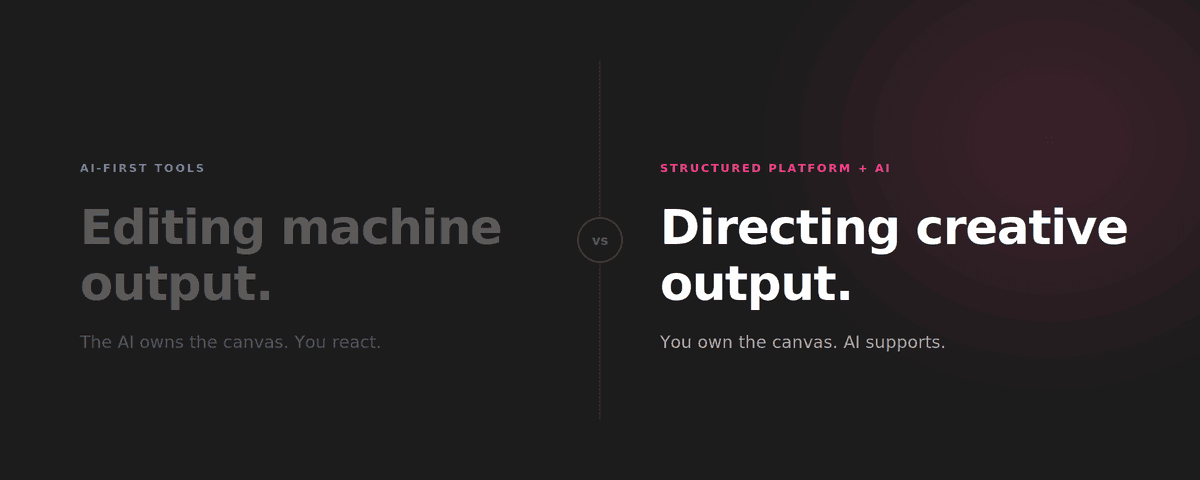
We’re seeing this dynamic playing out in other fields, too. The AI coding tools with the most traction aren’t the ones that replaced developers’ relationships with their codebase, they’re the ones that sit alongside it. This way developers can drop into the code, take over when needed, fix or modify as they see fit, and pick up where they left off. AI accelerates. But the human has their hands on the steering wheel. This model works because it’s how professional work actually happens. It retains creative iteration and keeps someone accountable for the final call.
But as AI matures, more tools are evolving toward this pattern. Free-form generation is genuinely useful for first drafts, spit balling, and early exploration. But workflows need predictability, direct control, and the ability to step in without losing what you’ve already built. We need to collectively move towards structured platforms with AI layered on top, not AI-first systems that treat editing as a secondary task.
Creative leadership in the AI era
We’re heading into a landscape where content volume scales faster than any team can match through production alone. In this accelerated environment the differentiator isn’t volume, it’s creative distinctiveness.
The brands that break through in the next few years of AI congestion won’t be the ones that produce the most. They’ll be the ones whose work is most distinctly theirs—specific in a point of view, captivating in execution, genuinely connected to an audience in a way that can’t be replicated by a competitor simply prompting the same tool.
Creative distinctness requires creative leadership. We need the people who can hold a vision, make judgement calls, push work past the obvious, and build a body of work that is instantly recognizable. AI doesn’t do that. It can’t. People do.
The question for creative teams isn’t whether to use AI. It’s whether the AI they’re using is making their work sharper and more distinctly theirs, or quietly doing the opposite. Tools that erode creative authority tend to feel efficient early on. Tools that amplify it produce compounding returns. The difference almost always comes down to the same thing—whether the human or the machine is driving the creative system, and who the tool was actually built to serve.
Our take on AI
Our view is simple. AI should handle the pattern-following work so creative teams can own the pattern-breaking.
That means that AI absorbs production overhead. We’re talking about formatting passes, resizing, accessibility updates, mass visual changes, or updating bulk file names. Freeing designers up to they can work at the level of creative direction rather than production management. It means AI that helps marketers move from idea to working canvas faster, so the gap between a brief and something real to react to shrinks from days to minutes. And it means AI that always leaves the human in control of the decisions that actually define the work.
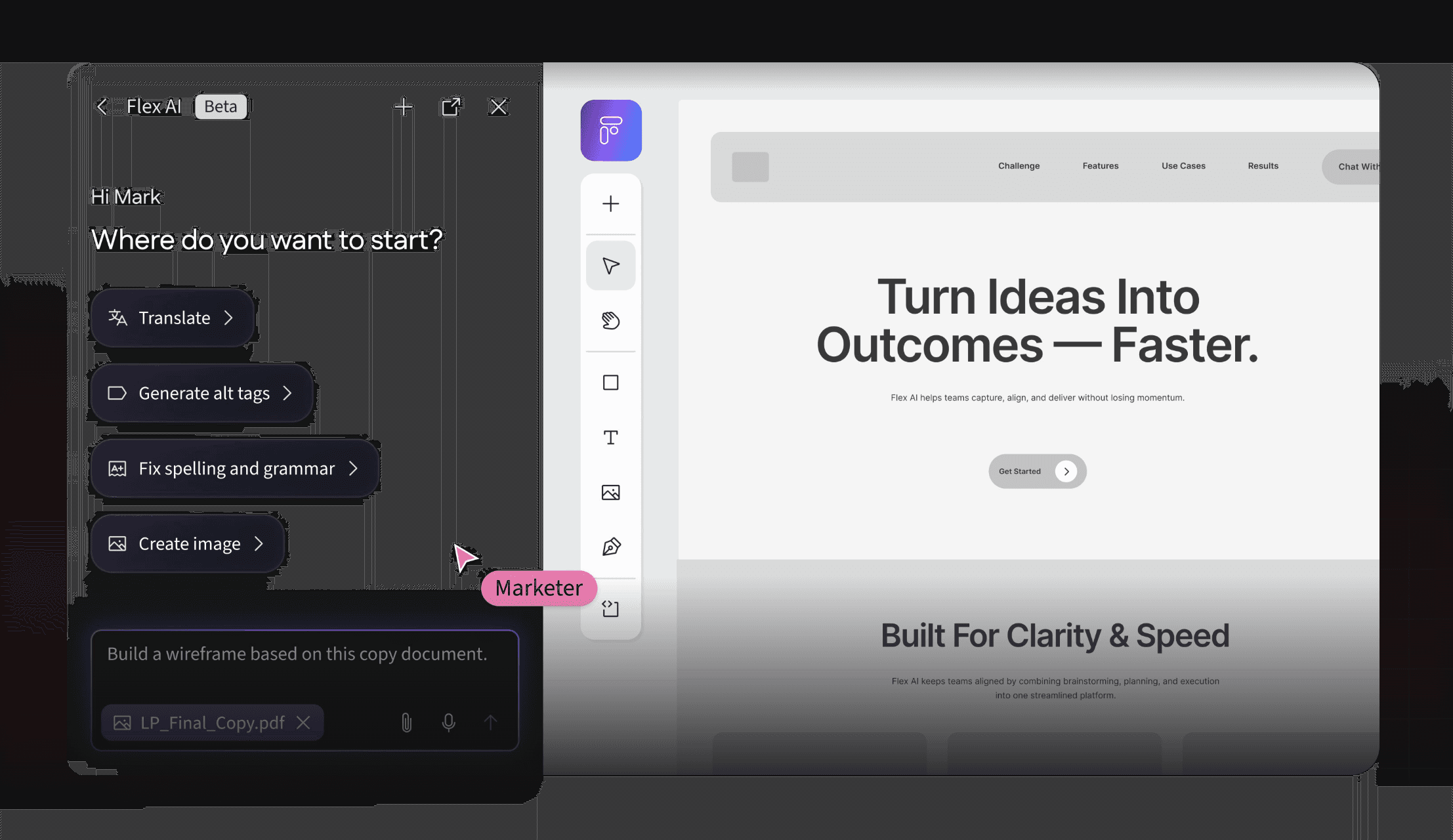
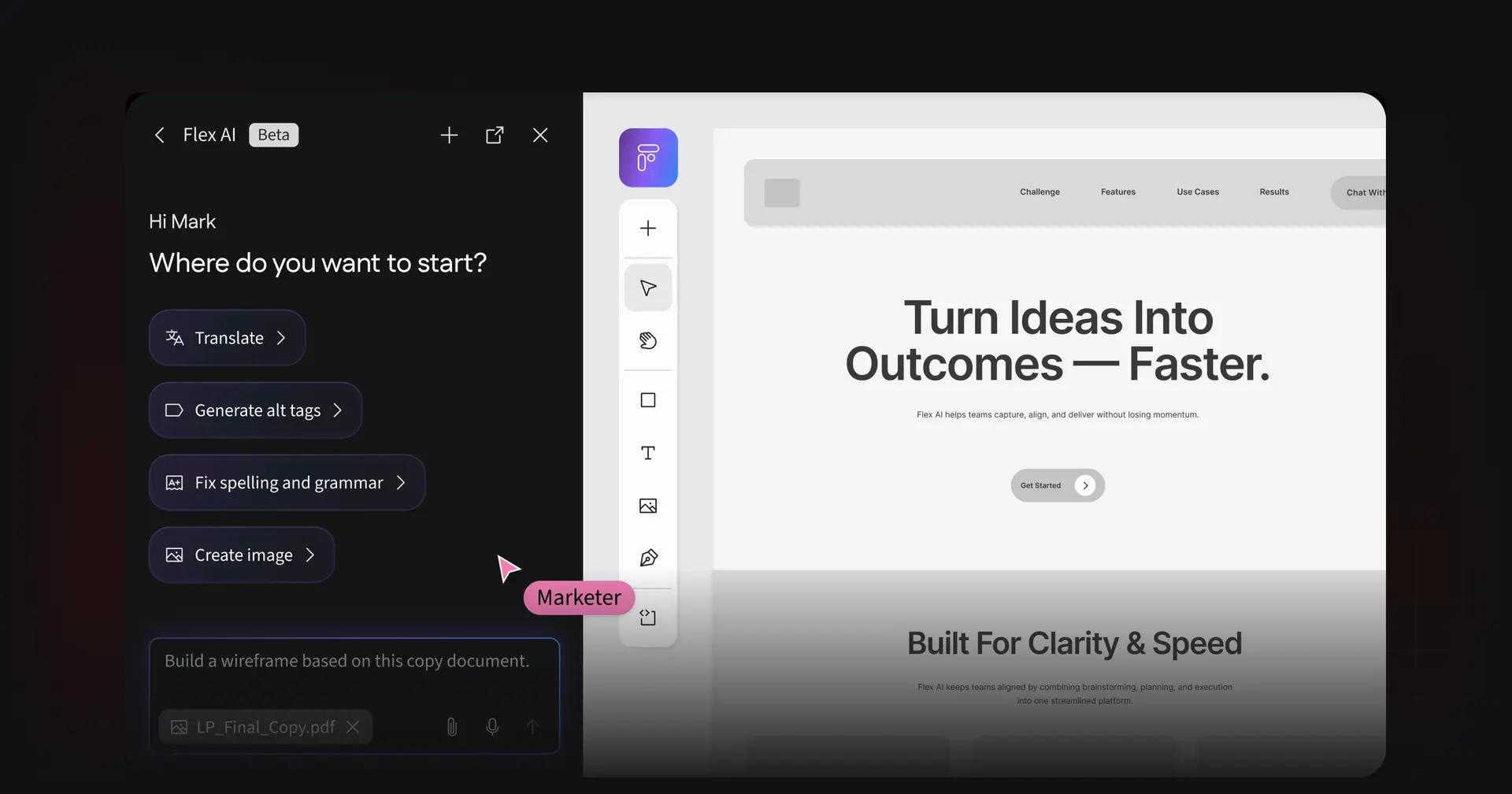
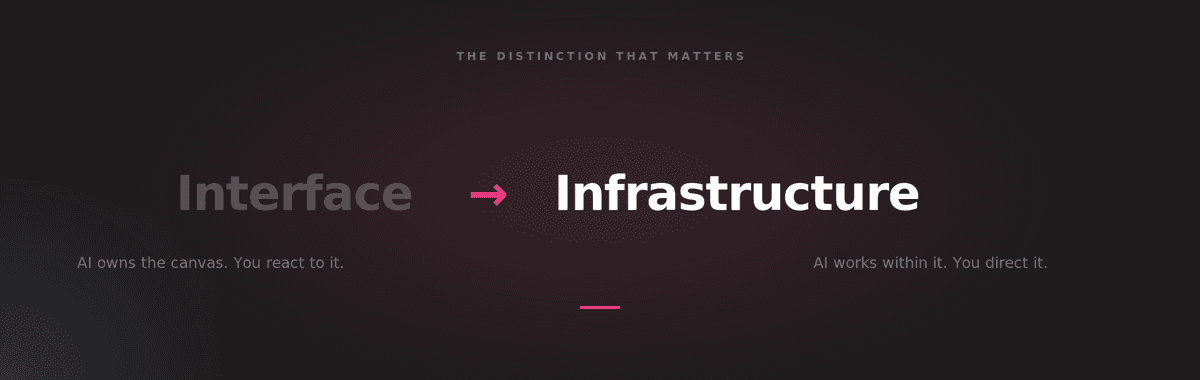
That’s the philosophy behind Flex AI. It’s built into the canvas, not bolted on top of it. This way it works within the design system rather than side stepping around it, producing outputs that are always editable by the person who owns the work. It’s also how we think more broadly about creative tooling.
AI is the most useful when it’s the infrastructure, not the interface.
The AI production era will separate creative teams that scale their best work from teams that let the machine set the ceiling. The teams that come out ahead will be the ones who kept their creative authority in tact and used AI to amplify it.
Creativity is still the differentiator. The companies that protect it will be the ones that break the pattern.
Learn more about Flex AI, our vision for AI working with creatives.